
This Earth Day, DIVEVOLK Champions Ocean Conservation Through Smartphone Underwater Photography, Making Every Diver an Ocean Advocate
How an accessible smartphone housing is quietly putting conservation fieldwork, from coral spawning livestreams to thousand-colony monitoring, into the hands of ordinary divers
NEW YORK, April 22, 2026 (GLOBE NEWSWIRE) -- On Earth Day 2026, DIVEVOLK, a global leader in smartphone underwater housing technology, is publishing a record of what its community of users, NGOs, and research teams has actually done for the ocean over the past several years. The company’s case for why this matters is simple: in ocean conservation, the scarcest resource is not scientific data. It is public attention. What gets photographed gets protected, and what cannot be seen cannot be defended.
Coral reefs have declined by roughly 50% since the 1950s. Between 4.8 and 12.7 million metric tons of plastic enter the ocean every year. The crisis beneath the surface is accelerating, yet most of that destruction happens far below the waterline, out of public sight. DIVEVOLK’s founding team has spent the past several years building tools and partnerships around that single problem.

The Case a Photograph Can Make
Underwater imagery has a documented track record of moving the needle. Wildlife photographer Justin Hofman’s 2017 photograph of a seahorse clinging to a plastic cotton swab became a defining image of ocean pollution, reaching millions and sharpening public pressure on plastic policy. Before-and-after footage of Great Barrier Reef bleaching, carried by Chasing Coral and Ocean Conservancy campaigns, helped unlock reef restoration funding around the world. Mission Blue, founded by Dr. Sylvia Earle, continues to use underwater imagery to designate and defend its network of Hope Spots.
Putting an Underwater Camera in Every Pocket
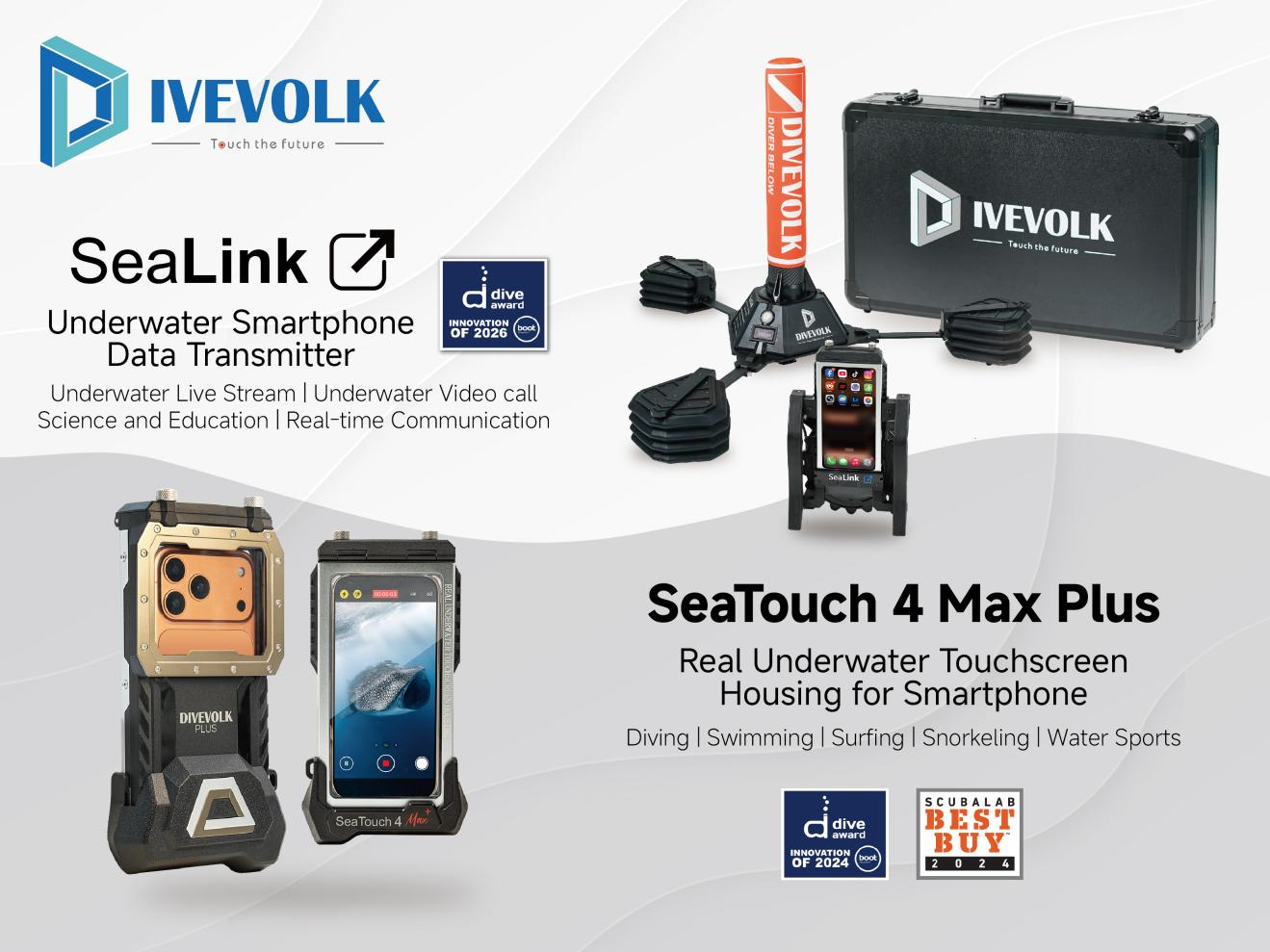
Traditional underwater photography has always been expensive. A professional housing, strobes, and lenses can run tens of thousands of dollars, keeping underwater storytelling in the hands of a small group of specialists. DIVEVOLK’s SeaTouch 4 Max product line changes that arithmetic: a diver’s existing smartphone, dropped into the housing, becomes a fully functional underwater camera. The housing is rated to 60 meters (197 feet), covering the entire recreational diving range, and uses a proprietary gel membrane system that lets the diver operate the phone’s native camera interface directly, with no Bluetooth lag. It is compatible with flagship iPhones and Android phones and accepts modular accessories including macro and wide angle lenses, dome ports, and dive lights. When the snorkeler in the Maldives, the freediver in Bali, and the recreational diver in the Caribbean all have a camera on them, the collective visual record of the ocean grows exponentially.

Dive Photos as Research Data
Underwater photography has quietly evolved from awareness tool to scientific instrument. Reef Check trains volunteer divers to survey reef health using standardized photographic protocols, feeding data into the global archives that shape marine policy. iNaturalist lets divers upload species photographs for AI assisted identification, assembling what is effectively a living atlas of ocean biodiversity. Coral Watch uses diver submitted imagery to track bleaching events across the Indo-Pacific in near real time.
Research teams are starting to fold smartphones into formal workflows as well. In Jangamo Bay, southern Mozambique, the marine conservation group Love The Oceans uses the SeaTouch 4 Max PLUS to load roughly a thousand reference photographs directly onto an underwater phone, replacing the laminated prints researchers used to haul down with them, and tracking more than 1,000 individual coral colonies as part of a four year University of Leeds study. The photogrammetry app Polycam turns smartphone photographs into real time 3D models of coral structures, part of a growing citizen ocean science ecosystem (see citizensofthesea.org) that is now substituting for the towed camera rigs that once cost hundreds of thousands of dollars. For a recreational diver, a smartphone, a housing, and an app like UWACAM (underwater color correction) or Vizalyzer AI (species identification) turn an ordinary dive into a data collection run. No marine biology degree required.
DIVEVOLK in Action: What This Has Actually Looked Like
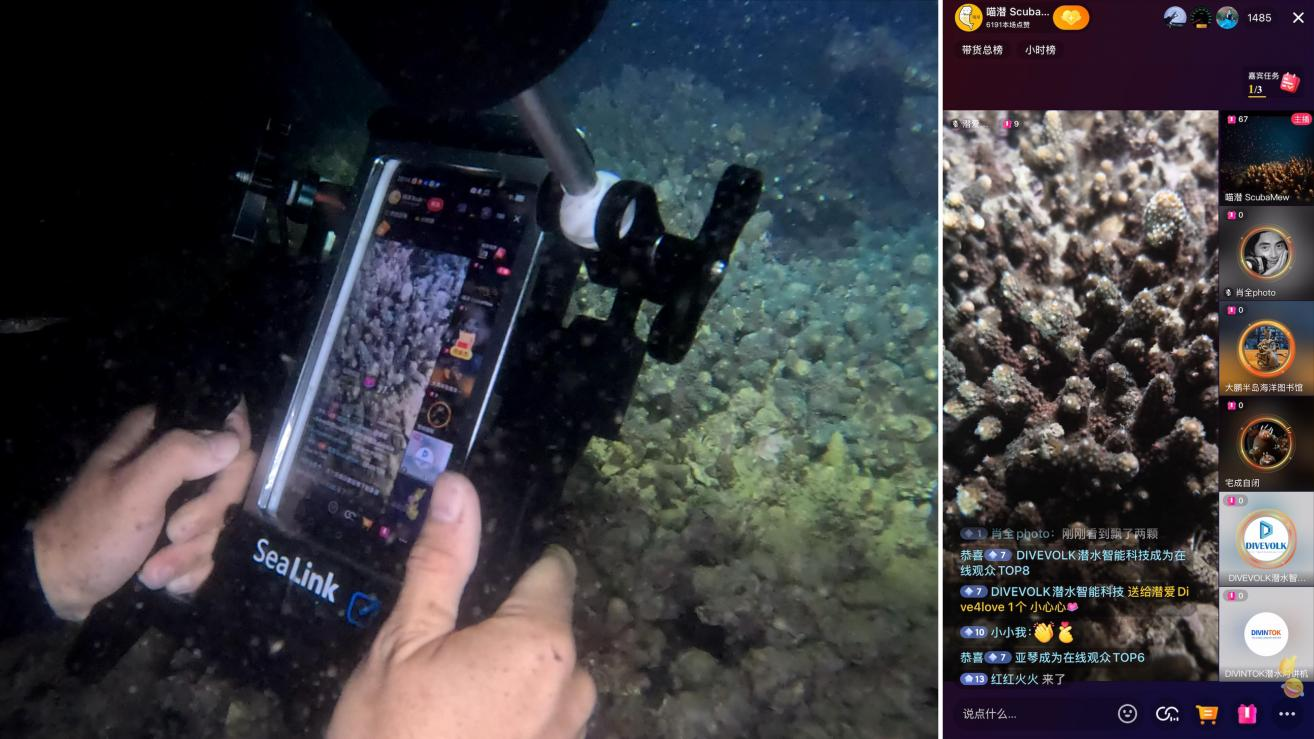
June 2025, Shenzhen, Dapeng Peninsula. DIVEVOLK partnered with the Shenzhen Dapeng New District Coral Conservation Volunteer Federation (DiveForLove) to broadcast Dapeng’s annual mass coral spawning live, using the SeaLink underwater streaming system. Dapeng is the northernmost extension of the world’s Coral Triangle. Reef cover here was close to 80% in the 1980s; today it sits between 20 and 30%. The livestream reached more than 100,000 viewers, with peaks of over 2,000 watching simultaneously. A spawning event that had always been the privilege of a few researchers was, for the first time, visible on ordinary phones.
June 2025, Wailingding Island and Sanya, China. Over World Oceans Day week, DIVEVOLK co-organized two events with local groups. At Wailingding, volunteers cleaned the beach and then descended to remove ghost fishing gear, using the recovered bottles to build an artificial reef habitat they called the “Thousand Bottle Reef.” At Sanya’s Baifu Bay, 34 families joined an eco snorkeling and underwater photography challenge, and children painted their own oceans on retired scuba tanks. The entire run was documented with SeaTouch 4 Max housings; the content went on to surface on social media with over 100,000 views.

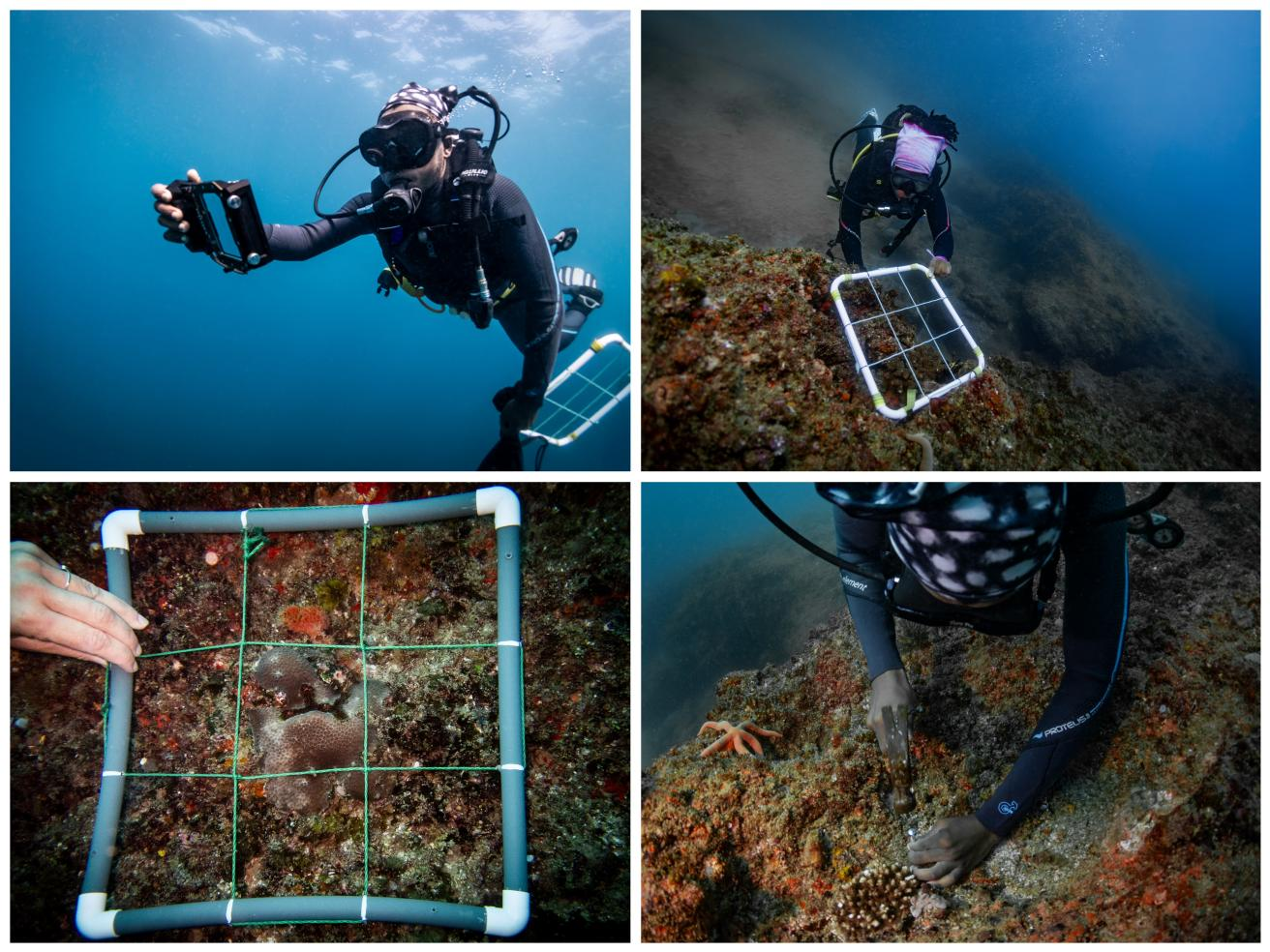
2014 to present, Jangamo Bay, Mozambique. Love The Oceans has been embedded in the community for more than a decade, running two long term programs with the universities of Leeds, James Cook, and Lancaster: a recruitment and mortality study tracking more than 1,000 individual coral colonies, and Project BEAM, testing whether clearing macroalgae accelerates reef recovery. The SeaTouch 4 Max PLUS plays a specific, load bearing role. At depth, the phone’s backlit screen keeps color fidelity high enough to identify colonies on sight, so the team no longer carries a thousand laminated prints in a BCD pocket.
Ongoing, 47 countries. Edges of Earth, co-founded by Andi Cross and Adam Moore, is an expedition and consulting outfit that applies corporate strategy thinking to the climate crisis. The team has carried DIVEVOLK housings from sub-Antarctic kelp forests to sub-Arctic glaciers, tropical coral reefs, oyster restoration sites in New York Harbor, and the wetlands of Brazil’s Pantanal. Their reason for choosing the housing is practical, not poetic: it is small enough to come along when a full camera bag is not an option.

2022, Guangdong. Xiaomi’s team filmed an entire coral restoration project underwater using a single Xiaomi 12 Pro inside a SeaTouch 4 Max housing, with no professional camera used at any point. The same year, the DIVEVOLK team ran a waterway cleanup in Conghua, Guangzhou, and began its ongoing support of coral nursery projects aligned with global networks such as the Coral Restoration Consortium, tagging participating fragments with the brand as they grow out on underwater frames for eventual outplanting.

Five Things Divers Can Do This Earth Day
DIVEVOLK encourages every diver, snorkeler, and ocean enthusiast to do at least one small thing this Earth Day:
- Document and share. Photograph the reefs, the marine life, and the pollution you encounter. Post with context: location, species, conditions. Your photos are evidence.
- Join a cleanup dive. PADI AWARE coordinates Dive Against Debris events worldwide. Find one near you or organize your own.
- Contribute to citizen science. Upload marine life photos to Reef Check, iNaturalist, or similar platforms. Even casual snapshots become valuable data points.
- Practice responsible diving. Maintain neutral buoyancy, never touch or stand on coral, keep a respectful distance from marine life. Take only photos, leave only bubbles.
-
Amplify the message. Share conservation content from trusted organizations. Tag ocean focused nonprofits when you post dive photos. However small your platform, use it to keep the ocean in the conversation.
About DIVEVOLK
Founded in Zhongshan, China, DIVEVOLK is a global technology company focused on smartphone underwater housings and accessories for diving, snorkeling, and marine photography. Its flagship SeaTouch 4 Max product line delivers professional grade underwater smartphone photography capability at a fraction of the cost and complexity of traditional camera systems.
The revolutionary SeaLink UW Smartphone Dada Transmitter enables phones to receive signals at depths of up to 30 meters underwater, supporting features such as live streaming and video communication across multiple platforms. DIVEVOLK was honored as ScubaLab's Best Buy in 2024 and twice won the Dive Award of Innovation in 2024 and 2026.
DIVEVOLK products are sold worldwide through divevolkdiving.com and authorized retailers.
Editor’s Notes
Product images, underwater photography samples, and infographics are available upon request. Earth Day is observed annually on April 22. Learn more at earthday.org.
Media Contact
Contact Person: Lexi
DIVEVOLK Marketing & Communications Email: collaboration@divevolk.com
Website: www.divevolkdiving.com
Photos accompanying this announcement are available at
https://www.globenewswire.com/NewsRoom/AttachmentNg/fb2ab4bd-432c-413b-a32c-a6adca14a24e
https://www.globenewswire.com/NewsRoom/AttachmentNg/91c5a0b1-6934-4650-a666-a60c91841d75
https://www.globenewswire.com/NewsRoom/AttachmentNg/7d336ae1-05ed-458c-8ec3-4e27a94dde39
https://www.globenewswire.com/NewsRoom/AttachmentNg/9dab198c-242b-4f99-ac40-0c99e4854e33
https://www.globenewswire.com/NewsRoom/AttachmentNg/4e758794-ee78-408c-bc79-b35286fcd2ec
https://www.globenewswire.com/NewsRoom/AttachmentNg/ae4aeb9e-a696-4ca7-9540-d769660e7f73
https://www.globenewswire.com/NewsRoom/AttachmentNg/2d769d39-7d7d-4f89-b9d6-7e02fe524167
https://www.globenewswire.com/NewsRoom/AttachmentNg/9da9f87a-49f5-4c01-807b-0a50e542b350

This Earth Day, DIVEVOLK Champions Ocean Conservation Through Smartphone Underwater Photography, Making Every Diver an Ocean Advocate
This Earth Day, DIVEVOLK Champions Ocean Conservation Through Smartphone Underwater Photography, Making Every Diver an Ocean Advocate
Smartphone underwater photography of tropical reef fish with SeaTouch 4 Max housing

Smartphone underwater photography of tropical reef fish with SeaTouch 4 Max housing
Coral spawning livestream setup in Shenzhen Dapeng Peninsula using DIVEVOLK SeaLink system
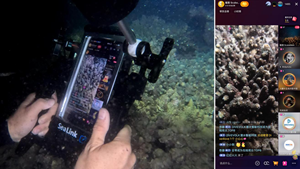
Coral spawning livestream setup in Shenzhen Dapeng Peninsula using DIVEVOLK SeaLink system
Family eco-snorkeling event in Sanya Baifu Bay with underwater photography challenge

Family eco-snorkeling event in Sanya Baifu Bay with underwater photography challenge
Love The Oceans researcher identifying coral colonies underwater with backlit smartphone screen
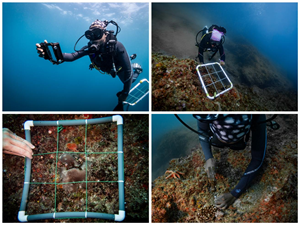
Love The Oceans researcher identifying coral colonies underwater with backlit smartphone screen
Edges of Earth expedition team using DIVEVOLK housing in sub-Antarctic kelp forest
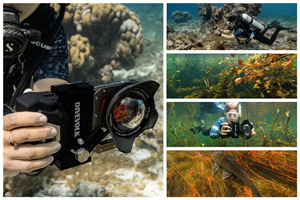
Edges of Earth expedition team using DIVEVOLK housing in sub-Antarctic kelp forest
Coral nursery restoration project filmed with Xiaomi smartphone inside SeaTouch 4 Max housing

Coral nursery restoration project filmed with Xiaomi smartphone inside SeaTouch 4 Max housing
DIVEVOLK product lineup
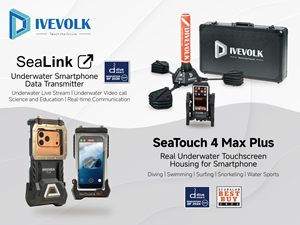
DIVEVOLK product lineup
Legal Disclaimer:
EIN Presswire provides this news content "as is" without warranty of any kind. We do not accept any responsibility or liability for the accuracy, content, images, videos, licenses, completeness, legality, or reliability of the information contained in this article. If you have any complaints or copyright issues related to this article, kindly contact the author above.
